Table of Contents
ToggleThe Chicken Shop Date that Broke the Internet
In This Post
Andrew Garfield’s viral Chicken Shop Date with Amelia Dimoldenberg wasn’t just a flirty stunt – it’s marketing gold. This post breaks down how that authenticity (or the illusion of it) fuels content creation, builds connection, and reinvents the celebrity interview for the internet age.
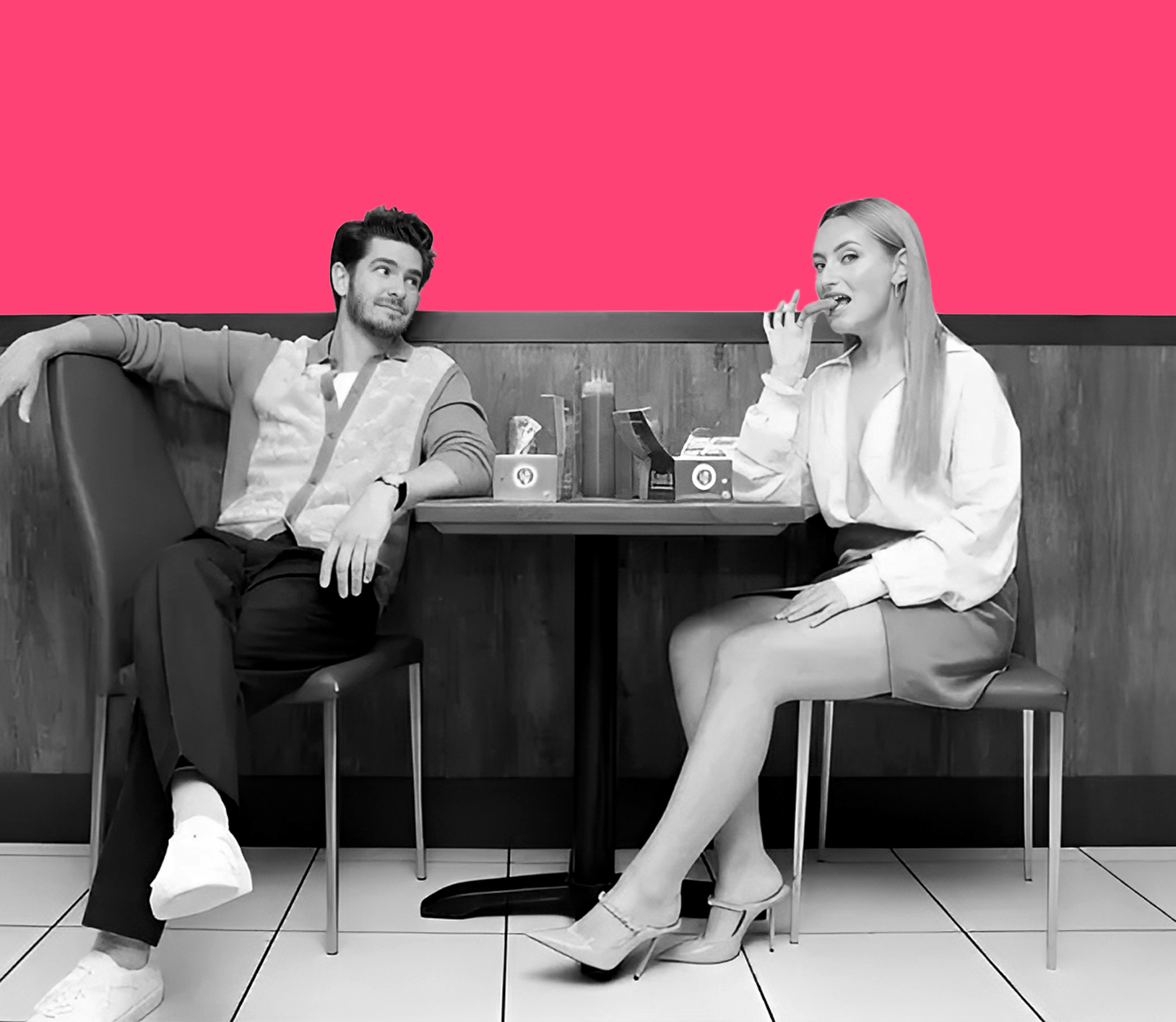
“If all of this wasn’t here, do you think we’d actually go on a date?” Andrew Garfield asked YouTube host Amelia Dimoldenberg during their Chicken Shop Date interview last week. He was referring to the cameras, and to the implied crew holding mics and lights behind the scenes of their “date.”
With this, Garfield broke the fourth wall, and coupled with the duo’s undeniable chemistry, created the most believable clip of flirtatious promo that the internet has seen in 2024.
The interview was years in the making, according to online fans who swooned over the pair’s red carpet meet-cutes, spanning back to 2022.
Their first interaction went viral on TikTok, when Garfield approached Dimoldenberg at the GQ Awards, to let her know that he loved her work.
“Do you know who I am? You’re kidding me,” Dimoldenberg replied, blushing.
“Of course I do,” Garfield said, looking down at his feet. “I watched all your Chicken Shop things.”
The internet has been set ablaze questioning the authenticity of their connection. For Amelia and Andrew, it seemed like love at first sight — at least, on TikTok. But was it romance, or really good marketing?
In other words, this isn’t just the internet’s favourite almost-rom-com – it’s a live case study in influencer marketing, parasocial relationships and the kind of flirty, fourth-wall-breaking content that actually moves people to watch, share and buy. The way this story has played out across TikTok and YouTube is part of a larger wave of fast-moving marketing microtrends.
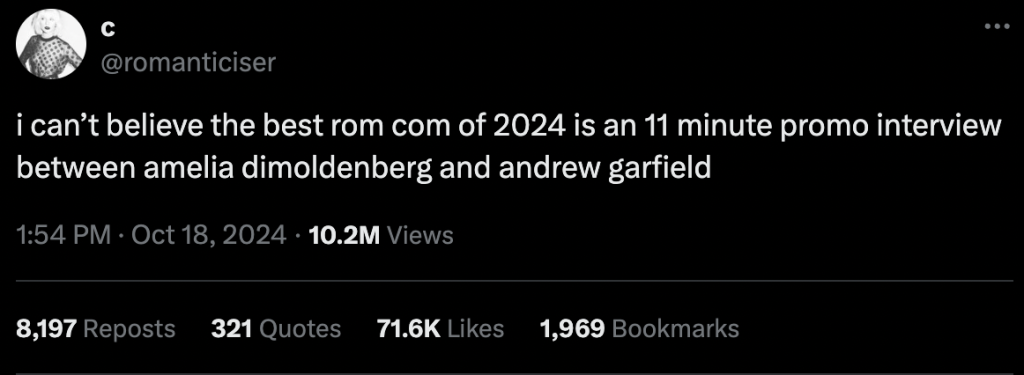
One comment on the Chicken Shop Date YouTube video, which has over 6 million views, said “this video is either an absolute masterclass in acting or a public declaration of true love, there’s no in between.”
I would argue that it’s both.
Love at first sight, or marketing strategy?
In their interview (and the viral clips leading up to it) the two tapped into a beloved trope: the girl next door meets the A-list actor, who propels her out of relative obscurity to a life of fame and fortune. But this trope relies on the belief that Dimoldenberg, who started hosting Chicken Shop Date, YouTube interviews with C-list UK celebrities a decade ago, is just like us. But since Chicken Shop Date’s inception, she’s skyrocketed to fame herself, with her interviews gaining the sheen of glamour that comes with money, success and time. Maintaining her girl next door image while she interviews the biggest celebrities of the moment is just that – an image. And seeing Andrew shine as a flirty movie star, stripped down to a nervous guy on a first date, makes him seem accessible — if he can swoon over Amelia, he’s within reach.
There’s an aspiration element at work here that lends itself to the success of Amelia’s interview style. We’ve watched internet sensations like Emma Chamberlain vlog their way to achieving to A-list YouTuber and “it girl” status. Yet we, as viewers, knew them before fame, in their awkward years.
Through these parasocial relationships, we feel like we’re right there with the celebrity – all access, behind the curtain. Amelia, like Emma, has flourished past the success of her original YouTube platform to do red carpet interviews for top tier brands and magazines, illustrating how the traditional celebrity interview format has been usurped in the digital age. Viewers want to watch the girl-next-door daily vlogger that they loved before they were popular to bring their hot celebrity crush down to earth — or to the chicken shop.
As such, buying into Garfield and Dimoldenberg “romance” requires buying into their respective brands — and in turn, consuming the content that promotes her platform, and his recently released movie (which corresponds with his Chicken Shop Date interview, of course).
From a marketing perspective, Chicken Shop Date sits at the intersection of celebrity interview format and influencer marketing strategy. Amelia isn’t just a host; she’s the protagonist of an ongoing story viewers have followed for years. That long-term parasocial investment is what makes a single 11-minute promo interview feel like a plot twist in a series we’re already obsessed with. We’ve seen a similar dynamic in publishing, where a book becomes less of a product and more of a character in someone’s online life – like Sally Rooney’s Intermezzo did this fall.
The power of connection for content creation
Today, content consumers are keenly aware of the fourth wall: it’s often a phone screen. Breaking the fourth wall requires a keen display of authentic connection that transcends two dimensional scrolling.
“So we definitely just watched them on a real date trying to act like it’s a fake date,” Buzzfeed reported that one online commenter wrote.
Andrew and Amelia’s chemistry is undeniable, but the authenticity of their connection could be besides the point. What’s more interesting to consider is our desire to pin down the status of their relationship, and our attraction to watching two celebrities flirt online.
The interview illuminates our core desires as consumers (love, connection and acceptance) that marketers tap into to drive successful campaigns. In an age when loneliness is an epidemic, and Gen Z are self-described as “touch-starved,” we’re craving more authentic connection, less Netflix romance — and brands are taking note. Tinder recently launched a video ad campaign (“It Starts With a Swipe”) that translates dating app messages to the screen, in scenes branded as modern “meet-cutes.” Ironically, in person, friends are swearing off the apps entirely, and deleting them from their phones. “I want to meet someone in real life” is a popular refrain. Andrew and Amelia did, spinning their meet-cute into marketing gold.
For brands and creators, the takeaway is simple: the most effective influencer marketing campaigns tap into real emotional needs – connection, desire, curiosity – rather than just pushing product features. When content feels like a genuine moment between people (even if it’s carefully produced), it stands out in a feed full of obvious ads. The same thing is true in copy: the lines that stick aren’t usually the cleverest ones, but the ones that feel most human. It’s the difference between building a brand people feel connected to and running one-off posts just to chase views.
The Takeaway
From a marketing lens, Andrew and Amelia’s Chicken Shop Date shows us that:
- Parasocial relationships are powerful fuel. When audiences already feel invested in two people, a single interview can land like a season finale.
- Influencer marketing works best when the “influence” is the story, not the sponcon. We remember the chemistry and the tension first – and only then clock the movie being promoted.
- Breaking the fourth wall can build trust. Acknowledging the cameras, the promo and the staging makes the whole thing feel more honest, not less.
- Connection travels across formats. That same spark is what powers celebrity interviews, TikTok meet-cutes and branded campaigns when they’re done well.
Last week, after the interview came out, I went back and watched Amelia’s old content, and later that day, I went to see Andrew’s new movie. I couldn’t help but think that what I really wanted to see was Andrew and Amelia on screen, with their sparkling eye contact, rather than a performance that I knew was scripted. But if their first date was just a “practise round” as Andrew said, proposing an off-camera round two, I’m sure that this won’t be the last hyper-modern, Truman Show-esque “romantic” encounter we see from them. And whatever they’re selling next, I’ll buy it. And as we’ve seen with other recent branding wins and flops, audiences have a sharp radar for what feels real versus what feels like a stunt.
If you’re thinking about how to build this kind of connection into your own content, that’s where we come in. As a digital marketing agency in Toronto and creative agency working across content and influencer marketing, we help brands design campaigns that feel as watchable as they are effective – whether that’s a low-key interview series or a full-scale influencer marketing strategy. Talk to us about your next content campaign.
FAQ:
The Youtube host and A-list actor met on the GQ red carpet, when Amelia was doing press interviews and Andrew was featured as GQ man of the year. Their palpable chemistry sparked immediate intrigue into their dynamic.
In the age of TikTok, consumers are more aware than ever of the lengths that brands and creators will go to in order to market sponsored content as authentic. Creating a relationship between creator and consumer is key when it comes to producing engaging content that people want to watch and, in turn, support. The most effective influencer marketing uses that connection to tell a story first and sell a product second. We talk about this when it comes to marketing modern lit in our blog on Sally Rooney’s latest release, Intermezzo.
That’s for them to know, and us to find out. XOXO, Gossip Girl.
The viral Chicken Shop Date shows that the best influencer marketing campaigns don’t feel like ads – they feel like compelling scenes in a longer story. When you invest in a creator’s world over time, audiences will happily follow them into a sponsored moment, as long as the chemistry, tension and personality feel real. For brands, the lesson is to build long-term creator relationships and formats, not just one-off promo posts.