Table of Contents
ToggleSummary:
The new year is a popular time for diets, workout plans and resolutions surrounding health and wellness—and brands capitalize on these annual trends, all year round. From the high-protein trend to the Goop detox and Ozempic, this post explores how the latest health trends are shaped by brands.
How “clean” food and beverage marketing can do consumers dirty (and how to do it right).
New Year Wellness Trends and the Power of “New Year, New You” Marketing
It’s no secret that the new year is a time of revival and renewal—and a recommitment to health and wellness goals. Annually, in January, gym memberships spike by 30%, sales of diet plans and supplements increase by 20-40%, and wellness apps double in downloads. We’ve seen the same pattern with seasonal microtrends in food and beverage, where “healthier” becomes more of an aesthetic than an outcome.
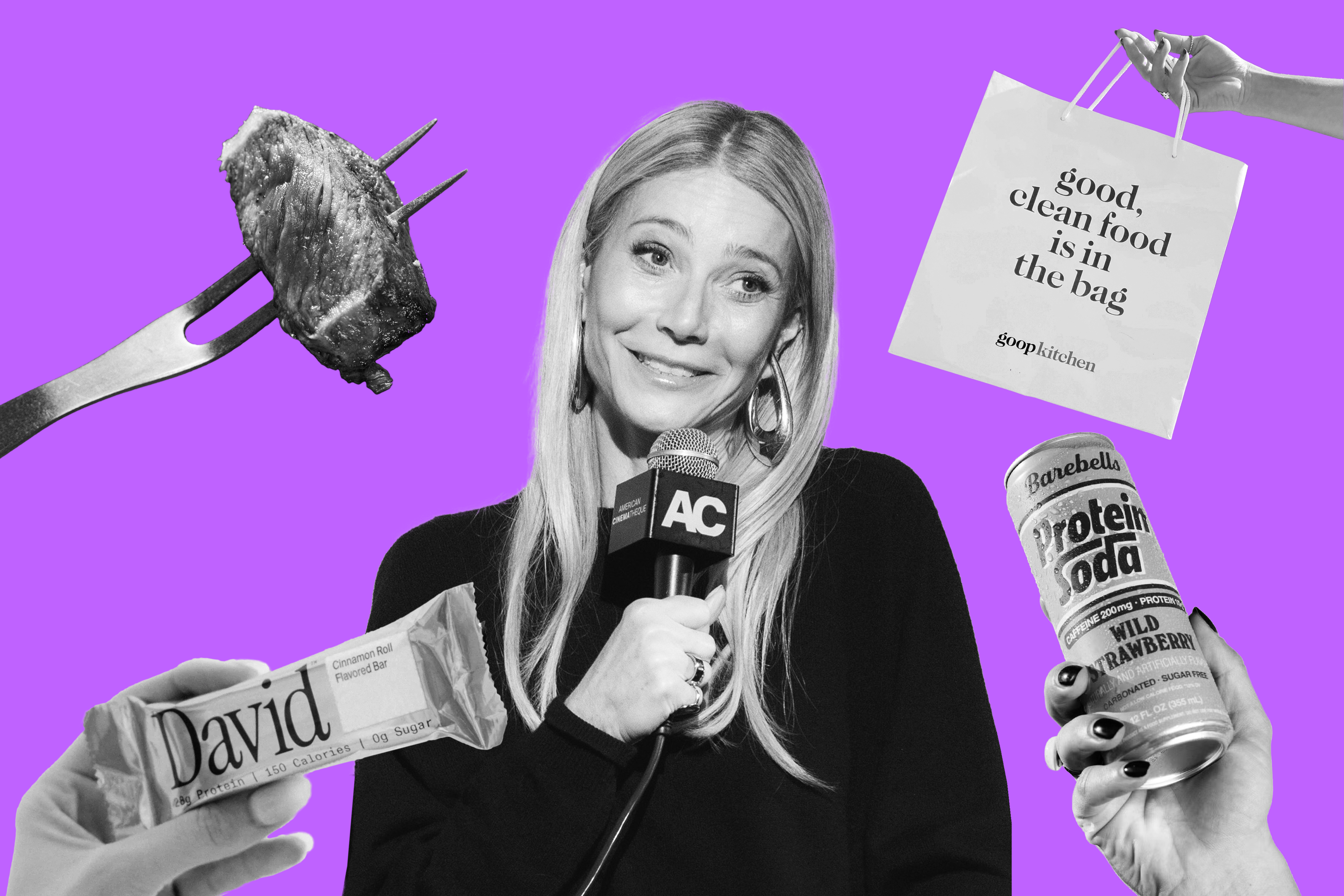
“The fresh start January offers is the perfect time to work out what healthy looks like for us as individuals,” a Vogue article on New Year wellness trends explained. Brands capitalize on this tried-and-true approach to the new year, regardless of how sustainable this approach to wellness is: for example, Gwyneth Paltrow’s Goop publishes an annual detox on New Year’s Day, with a tight, gluten-dairy-sugar-caffeine free diet guideline to follow to feel “refreshed and rejuvenated.”
But research shows that expedited, extreme approaches to wellness are unsustainable and ultimately not very healthy. Black-and-white thinking, in terms of exercise, nutrition and dieting (an “all or nothing” approach) often leads to falling back into old habits, because the extremity of these newly-implemented practises (running every day, restricting calories) isn’t sustainable, and it’s hard on your body. I say this to illuminate how wellness isn’t always about actual wellness—it’s about selling the image of it. That gap between feeling healthy and being healthy is exactly where wellness marketing lives and why food and beverage brands need to be careful about how they show up in January and beyond.
Inside the $2 Trillion Wellness Industry and Functional Food and Beverage Marketing
The wellness industry is valued at $2 trillion, and revenue streams in the wellness sector are rapidly multiplying—particularly in the food and beverage space.
“From protein-packed potato chips to cognition-enhancing mocktails, a flurry of innovation has hit the functional-nutrition space,” an article detailing Gen Z’s relationship to wellness reported.
Goal-Oriented Dining: How Restaurants Market Health and Wellness
A new trend in eating out reflects this shift towards health-conscious marketing drawing in consumers. Matters, a New York-based fast casual restaurant, advertises the nutritional value of its chopped salads and bowls, which can be customized on an in-house iPad (there’s a sliding scale that helps you to pinpoint the calories in your sides, for example). This trend, called “goal-oriented dining,” signifies the efficacy of targeting trendy health metrics when it comes to getting diners in the door. This is wellness as UX: slide a bar, tweak your macros, feel like you’re optimising yourself. For food and beverage marketing, it proves that framing — “high-protein,” “gut-healthy,” “cognition-boosting” — can be as powerful as the ingredients themselves.
“Seed oils are out, transparency is in,” a TikTok about the trend announced. TikTok’s role here is huge: a couple of viral posts can turn niche nutrition discourse into mainstream dining expectations.
The High-Protein Trend: When Wellness Marketing Becomes a Food and Beverage Buzzword
In particular, the “high-protein” diet trend has been picking up steam for years (the search term spiked by 32% in 2022 and has been steadily increasing since), culminating in the current grocery-store landscape of protein-jacked crackers, granola bars, cereal and other products typically lacking high concentrations of protein. It’s even being cited as a key ingredient on ice cream and candy bar packaging, NPR reported.
“Protein’s got a good reputation right now,” the article said. So much so that adults are eating 20% more protein than required.
According to the BBC, “The popularity of high-protein products in general is entirely due to marketing. Manufacturers can easily [and cheaply] add extra protein to their products and whack the price up.” In other words, the high-protein trend is as much a labelling exercise as it is a nutritional shift. For brands, it’s a reminder that you can either use trends like this to tell the truth in a fresh way or slap a buzzword on the same old product and hope no one reads the fine print. Protein is just one example of the microtrends reshaping how we talk about “healthy” — often faster than consumers can keep up.
From Organ Meats to Chickpea Snacks: Remarketing Everyday Foods as High-Protein
As such, “consumer interest in protein has created opportunities” for brands to meet this growing desire in the market—and many are jumping at the opportunity.
But what does this actually mean? That brands are increasing the quantity of protein in their products, or just that they’re remarketing their products as if they are? In truth, it’s all how you spin it.
For example, typically undesirable cuts of meat are having a renaissance. Organ meats are being touted for their naturally high protein content—a genius approach to marketing cheap cuts (like liver) that are usually less appealing to customers.
While certain products are being enhanced with added protein (think Khloe Kardashian’s “protein popcorn”), many products that naturally contain protein are being marketed to reflect the fact of the matter, which has never changed (think “protein-rich” milks, chickpea-based snacks etc). In this sense, the protein craze has given the food and beverage industry a new angle from which to market your run-of-the-mill snack drawer staples.
David’s Protein Bars and Viral Wellness Marketing in the Ozempic Era
Take David’s Bars, a luxury protein bar brand, for example. The company, which sells luxuriously packaged protein bars, generated $102 million in revenue in 2024, achieving landmark early revenue with $1 million in sales in the first week.
There’s an interesting intersection between the high-protein craze and other health and wellness trends, such as GLP-1 medications like Ozempic. The correlation being that customers are spending more money on high-protein products, and on medications like Ozempic, often in tandem.
GLP-1 Drugs Like Ozempic and the Rise of Protein-Fortified Wellness Brands
“Patients who use GLP-1s are focused on meeting their nutritional and health needs while reducing caloric intake, which means that protein- or nutrient-fortified foods, gut health products intended to address digestive discomfort, and workout programs focused on building and maintaining muscle mass are each positioned to grow,” a McKinsey article cited. None of this is inherently bad — people on GLP-1 medications do need to think about protein and muscle mass. But when wellness marketing leans too hard on weight-loss drugs and “Ozempic-adjacent” aesthetics, it risks turning complex health decisions into just another vibe. We’ve seen how badly it can go when brands chase buzzy health narratives without a grounded sense of responsibility or alignment.
Clean” Labels, Scientific Claims and Building Trust in Wellness Marketing
In this vein, consumers are increasingly gravitating towards brands that tout strong scientific claims. In a sea of high-protein, low-cal, carb-free diet language overload, numbers, facts, and figures stand out as credible indications that THIS product is worth your money, that THIS protein bar will change your life!
As a brand in the food and beverage space, it can be overwhelming to approach modern wellness trends as opportunities for growth, because the market is so saturated. But it’s crucial to be able to do so. As McKinsey reported: “Those that act now to serve unmet consumer needs, earn customer trust, and deliver real value can turn today’s tailwinds into tomorrow’s competitive edge.”
Partnering With a Wellness Marketing Agency for Food and Beverage Growth
At Arnold Street Media, we work with you to craft that competitive edge through authentic wellness marketing for your food and beverage brand — no scare tactics, no pseudo-science. As a digital marketing agency in Toronto and creative agency, we help you translate health and wellness trends into campaigns that are honest, effective and actually useful for your customers. Get in touch to learn more today.
FAQs
It’s difficult to say whether or not Goop’s annual detox “works” in a scientific, long-term sense. Like most short-term reset plans, it may help some people feel more intentional about what they’re eating and give them new recipe ideas, but it’s not a magic fix — and it can be quite restrictive. If you’re considering any major diet changes, it’s always worth talking to a healthcare professional first.
David’s Protein (David Bars) started marketing cod — literally, a four-piece pack of white fish — as a viral marketing tactic. The point was to draw attention to how their low sugar, low-calorie protein bars pack roughly the same amount of protein as a piece of fish. The campaign did its job: it gained traction on social media and sparked conversation about the product and the wider high-protein trend.
GLP-1 drugs like Ozempic mimic a hormone (GLP-1) that helps regulate blood sugar levels and slows down digestion, which can increase feelings of fullness. They were developed to treat type 2 diabetes and are now also prescribed for weight management. Because they’re prescription medications with real side effects, any decision to use a GLP-1 drug should be made with a doctor, not based on trends or marketing.
Start by grounding your messaging in reality: don’t overpromise, don’t imply that a single product will “fix” someone’s body, and be careful with extreme or all-or-nothing language. Focus on clear, honest benefits (like extra fibre, protein or convenience) instead of fear-based tactics. And remember that wellness marketing works best when it supports what healthcare professionals are already saying, not when it tries to replace them.
If you’re unsure where that line is for your brand, that’s exactly the kind of work we do with clients.